

There are things we know how to explain, and there are things we can feel before we find the words for them.
A tension in the chest that appears whenever a certain subject comes up. A drop or punch in your gut, even though everything looks fine on paper. An emotion that keeps returning, asking for our attention, but refuses to fit into a sentence.
We often try to understand these experiences by thinking harder. We analyse, interpret, search for explanations and replay conversations in our heads. Sometimes that helps. Sometimes we end up circling the same questions, no closer to what we actually feel.
What happens when we stop trying to think our way towards an answer and begin by listening instead?
This is where somatic writing comes in.
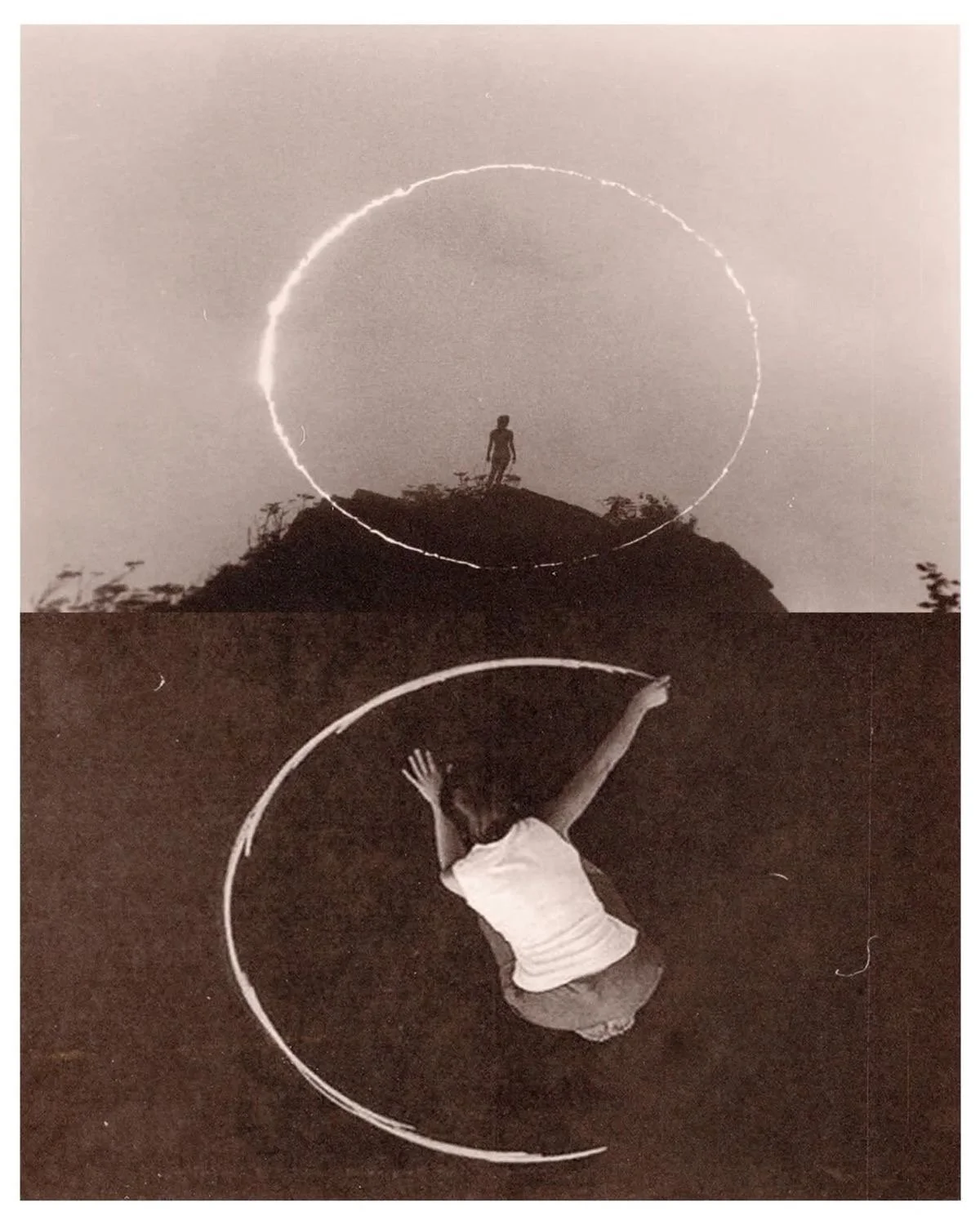
Somatic writing is a body-led approach to writing that begins with your lived, physical experience rather than a predetermined idea or story.
The word somatic refers to the BODY (from: SOMA) as it is experienced from within: your sensations, movements, impulses, feelings and inner landscape.
In somatic writing, you bring attention to that experience and allow writing to become a way of exploring it.
Instead of sitting down with the intention to write something insightful, beautiful or coherent, you might begin by noticing the weight of your body in the chair. The movement of your breath. A tightness in your throat. A feeling of restlessness you can't quite explain.
Then you write.
Not necessarily about the sensation, but from the place of having noticed it.
The words might arrive as fragments, images, repetitions or unfinished thoughts. They might surprise you. They might seem to make little sense at first. That is okay.
The purpose isn't to produce a polished piece of writing. It is to create space for an experience to unfold without immediately deciding what it means.
Writing becomes less about getting the words right and more about finding out what is there.
How is somatic writing different from journaling?
Journaling often begins with a question or an event: What happened today? Why did that conversation upset me? What do I want to change? These can be valuable ways of reflecting on our lives.
Somatic writing shifts the starting point. Rather than immediately asking Why do I feel this way?, you might ask:
What am I noticing in my body right now?
Rather than explaining why you felt hurt, you might describe what hurt feels like before you make sense of it. Is it a heaviness? A contraction? Heat behind the eyes? An urge to turn away, speak up or disappear?
There is no single correct way to practise somatic writing, and the boundaries between journaling, intuitive writing and embodied writing can overlap. What distinguishes this approach is the emphasis on direct experience and the willingness to let the writing emerge before the mind has organised it into a familiar narrative.
You don't need to stop thinking altogether. You simply give thinking a little less responsibility for deciding what comes next.
Why begin with the body?
We are often taught to trust what we can explain. If we can make a convincing argument for a decision, we feel more comfortable making it. If we can name an emotion, we feel we should be able to resolve it.
But human experience doesn't always arrive in a logical sequence.
Sometimes you notice a reaction before you understand it. Sometimes you feel drawn towards something without knowing why. Sometimes you discover that the explanation you've been giving yourself doesn't quite match what you experience when you slow down and pay attention.
The body can offer another point of entry into self-inquiry.
A physical sensation isn't automatically a truth, an instruction or a hidden message. It is information about your present experience — something you can notice with curiosity rather than immediately interpret.
Writing gives that experience somewhere to go. It allows you to stay with an impression for a little longer, explore different words for it, and notice what changes as you put it on the page.
You may find a clearer expression of something you already knew. You may encounter a contradiction. Or you may finish without an answer at all, but with a more honest sense of where you are.
That, too, can be meaningful.
Somatic writing and the parts of ourselves we keep hidden
Not everything we experience fits the version of ourselves we have learned to present to the world.
We might be proud of being independent, yet long to be cared for. We might want to be generous while feeling resentment. We might say yes when something in us wants to say no.
These contradictions can be uncomfortable. It is tempting to explain them away, judge them or move quickly towards the version of ourselves we think we should be.
Somatic writing offers an opportunity to become curious about these less convenient parts.
What happens if you let the resentment speak without making it a verdict on your character? What might the part of you that wants to hide have to say? What changes when you give an emotion a few minutes of attention instead of immediately trying to fix it?
This can become a form of shadow exploration: not an attempt to uncover something dramatic or force a revelation, but a willingness to notice what has been pushed aside, dismissed or left without language.
You do not have to agree with every thought that appears on the page. You do not have to act on every impulse. You are simply allowing more of your experience to be seen.
Sometimes the first step towards a different relationship with ourselves is not changing anything. It is becoming willing to look.
A simple somatic writing practice to try at home
You don't need previous writing experience, a special notebook or an hour of uninterrupted time. Begin with ten minutes and see what you notice.
1. Arrive where you are
Find a position that feels comfortable enough. Let your attention settle on the contact between your body and the chair, the floor or whatever is supporting you.
Notice your breathing without trying to change it.
Look around the room if that helps you feel present. There is no need to close your eyes or force yourself into stillness.
2. Notice one sensation
Bring your attention to something you can physically notice.
Perhaps your jaw is tight. Perhaps there is warmth in your hands, a flutter in your stomach or a feeling of spaciousness around your chest.
Try to describe the sensation without explaining it.
Is it heavy or light? Still or moving? Sharp or diffuse? Does it change as you pay attention?
There is no need to find a significant sensation. An ordinary one is enough.
3. Let the writing begin
Take your pen or open a blank document.
Begin with one of these prompts:
Right now, I notice…
If this sensation had a voice, it might say…
What I haven't been saying is…
A part of me wants…
What I wish I could admit is…
Keep your hand moving if that feels comfortable, but don't force yourself to fill the page. You can pause, change direction or write the same words several times.
Resist the urge to edit as you go. You can make sense of what you've written later, if you want to.
4. Read with curiosity
When you're ready, pause.
Notice how you feel now compared with when you began. You might reread what you've written, or you might prefer to leave it on the page without analysing it.
Ask yourself: Is there anything here I want to pay attention to?
You don't need to turn every session into an insight or a decision. The practice is valuable as an opportunity to listen, even when the result is simply a few honest sentences.
And if the exercise begins to feel overwhelming, stop, look around, reconnect with your surroundings or return to something that helps you feel grounded. You are allowed to work at your own pace.
Do you need to be a writer?
Not at all.
You don't need to be articulate, creative or particularly comfortable with words. You don't need to share what you write with anyone.
In fact, letting go of the idea that your writing has to be good can be part of the practice.
You might write in fragments. You might repeat a phrase. You might discover that the sentence you started with is not the sentence you want to finish with.
There is no audience to impress and no final product to deliver.
Writing is simply the medium. Your attention is the practice.
What somatic writing can offer
Somatic writing isn't a magic solution, and it won't necessarily make every difficult feeling clear. But it can offer a different way of meeting yourself.
It can give you a place to explore an emotion before you know what to do with it. It can help you notice the gap between what you say and what you experience. It can create room for contradictory feelings without demanding that one of them win.
Over time, the practice may help you become more familiar with your own language — the words, images and expressions that feel true to your experience.
Perhaps you'll find words for something you've carried for years. Perhaps you'll notice a pattern you hadn't seen before. Perhaps you'll simply spend ten minutes listening to yourself without interruption.
None of these outcomes needs to be forced.
The invitation is to approach yourself with curiosity rather than correction.
To let an experience be present before deciding what it means.
To discover that you don't always have to know what you want to say before you begin.
Sometimes, you find the words by listening.
Come and experience somatic writing with me
If this way of exploring yourself resonates with you, I'd love to welcome you to my free live online Somatic Writing workshop. We'll slow down, turn our attention inward and explore a guided writing practice together. There will be space to notice what is present, follow the words that emerge and discover what it feels like to write without needing to get it right.
You don't need to be a writer. You don't need to arrive with a particular question. And you won't be required to share anything personal. Just bring a notebook, a pen and a little curiosity about what might happen when you give yourself space to listen.
Somatic Writing — A Free Live Online Workshop
Friday, November 6, 2026
5:00 PM Bali time · 60 minutes
I look forward to exploring with you.
Kat